The Meat of the Matter
Het Imaginarium | Open Air Museum, Arnhem (The Netherlands)
Overview
Year: 2024
Location: Nederlands Openluchtmuseum - Arnhem
Type: Familiespel
My role: Co-auteur
In collaboration with:
Het Imaginarium (concept, interaction design & copywriting)
Hanne Marckmann (advice)
Anouk van der Reijen (editing)
Vera van Duren (production)
Nederlands Openluchtmuseum (construction)
About the project
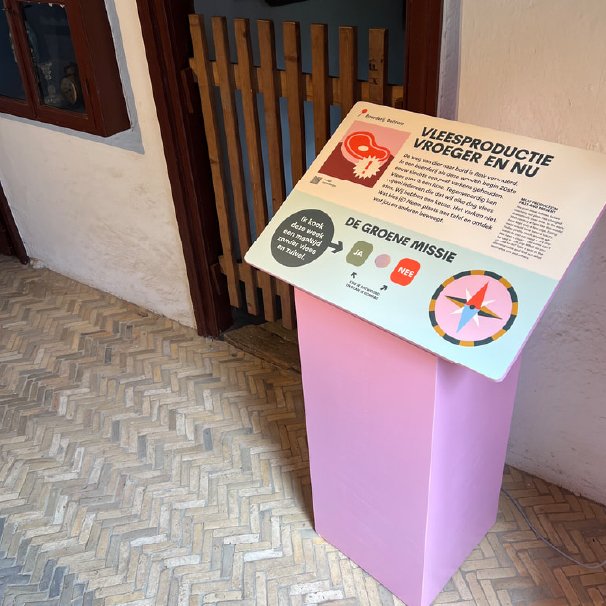
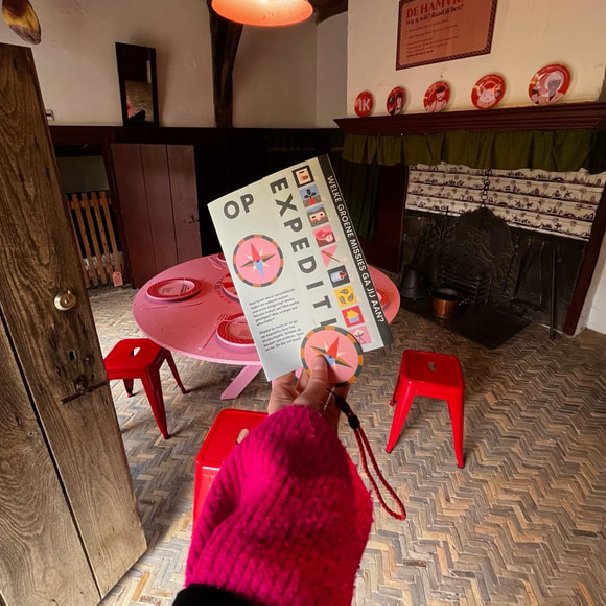
In 2024, the Dutch Open Air Museum developed a route filled with Green Missions. Go on an expedition, complete the missions, and explore how our choices shape the world around us. Who knows… you might end up around the table to answer The Meat of the Matter.
“Our choices shape our future,” the museum says. The choices people made in the past are not the same as the choices we make today. Every decision is influenced by our values, upbringing, surroundings and the time we live in. Your choices may not be my choices, but by exploring each other’s perspectives, we can begin to understand where they come from.
As part of the Green Missions, the museum wanted to introduce a family game about meat consumption inside one of its historic farmhouses.
About the family game
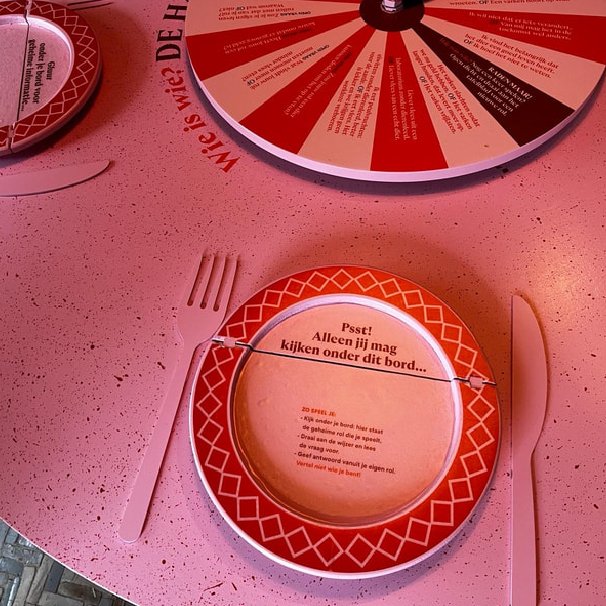
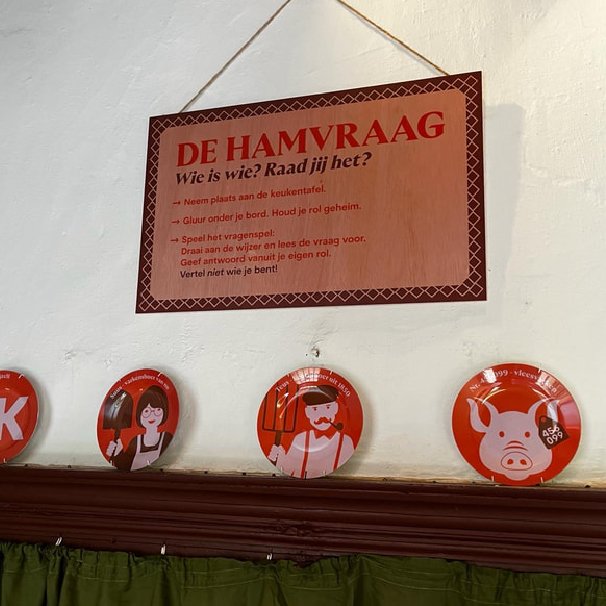
The Meat of the Matter is a dilemma game for two to five players. Each player takes a seat at the table and receives a plate. But there’s a catch: only you are allowed to look underneath your own plate. Hidden beneath is your secret role.
You might be:
- A farmer from the past
- A modern-day farmer
- A pig
- The inventor of cultivated meat
- Or simply yourself
Throughout the game, players respond to a series of dilemmas from the perspective of their hidden character. Along the way, they discover facts and stories about meat production and consumption, both past and present. The information hidden beneath each plate is gradually shared, allowing players to piece together who everyone might be.
At the end of the game comes the inevitable question: Who was who?
The game invites families to discover that every choice has a story behind it, and that understanding different perspectives can be just as important as finding the “right” answer.